




Gem Size Guide
When selecting a gemstone for your engagement ring, understanding the difference between carat weight and millimeter size can be helpful. A number of factors can influence the relative ratio of carat weight to face-up size of a gem. Even the shape and cutting style of a gem can affect how large it looks compared to its weight- for example, gems with a keeled pavilion will have a greater weight than those with a brilliant pavilion.
Different gems have different densities; for example, sapphire is much denser than many other common gems, and will have a smaller face up size at any given carat weight. Finally, the style of your ring setting and the proportions of your hand will play important roles in how your gem looks on your finger. The following guide will help you understand these trade-offs as you choose your gem.
Carat Weight vs. Millimeter Size
Carat Weight: A carat is a unit of weight used to measure gemstones, giving a general idea of how “big” a gemstone is. However, every type of gemstone has a different density, so two different types of gems with the same carat weight may not be the same size.
Millimeter Size: Gems are measured in millimeters by length, width, and depth. The millimeter measurement will give you an exact idea of how big the gemstone will appear.
When discussing gem size people often default to carat weight–something conditioned by the ubiquity of diamonds–but colored gemstones have different densities and they can vary quite a bit in size for the exact same carat weight. For reference, an ideal cut 1-carat round diamond typically measures 6.4 – 6.5 mm in diameter, while an ideal cut 1-carat round sapphire is slightly smaller at 5.8 – 6.0 mm across. That’s why, when choosing a gemstone, it’s best to focus on its dimensions in millimeters rather than relying solely on carat weight.

Shape and Cutting Style
The shape or cut of your gemstone also influences its perceived size. Round, square cushion, and oval-shaped gemstones typically have larger dimensions compared to their weight. On the other hand, elongated shapes like ovals, rectangles, and pears can seem to take up more length on your finger than their carat weight would suggest.
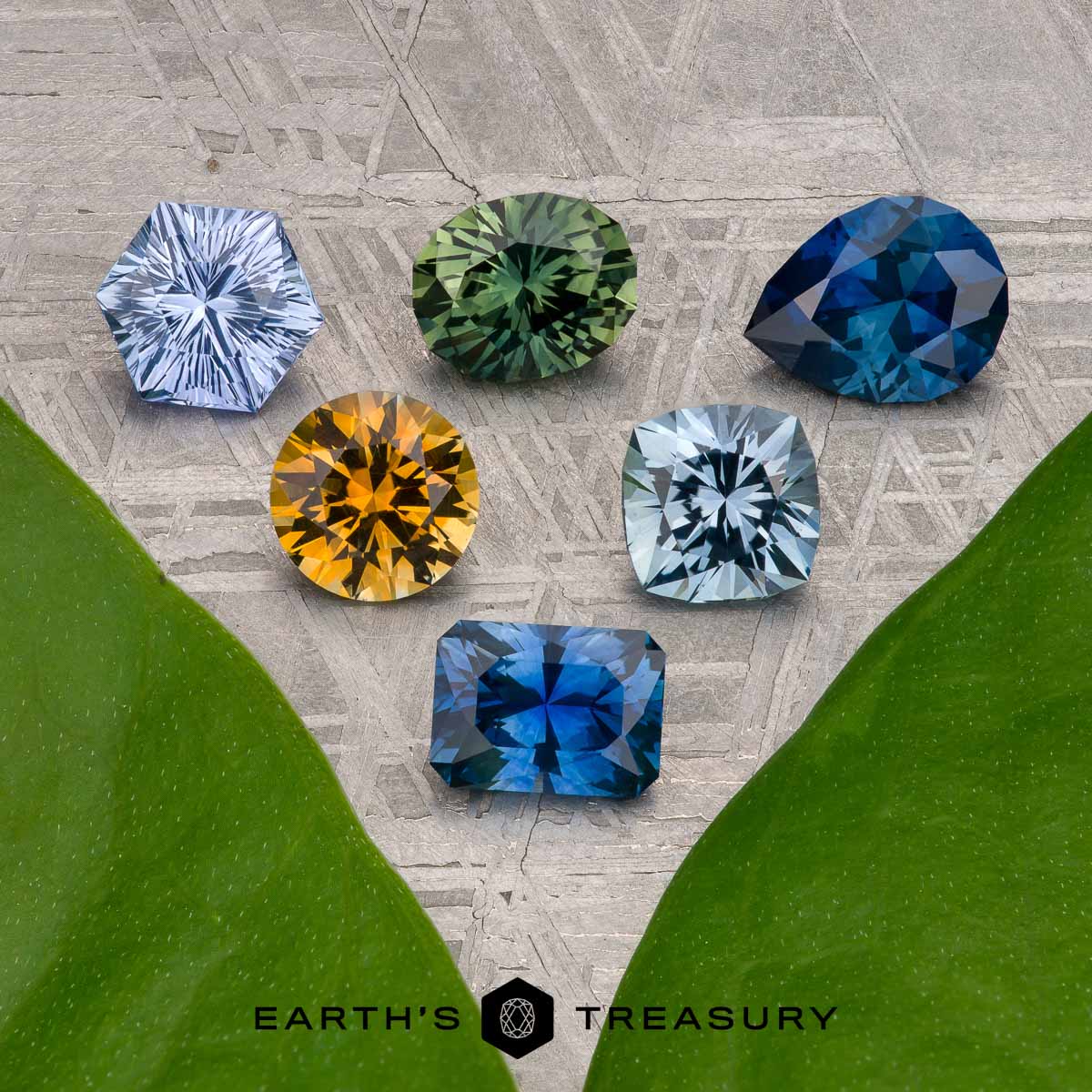
Poorly cut gemstones can influence the gem’s weight and size by choosing less-than-ideal proportions that reduce their sparkle. For example, a round sapphire with a 6.0mm diameter can be manipulated into a higher carat weight by making the gem deeper, despite the potential repercussions to the color and brilliance. With a gem like that, you will be paying more for a higher carat weight, but getting a smaller gem when viewed face-up as in a piece of jewelry. Here at Earth’s Treasury, we are obsessed with precision gem cutting. Our named gemstone cuts, from “Serendipity” to “Stella” and even our modified version of the classic diamond round brilliant, are mathematically optimized specifically for sapphire to give the best sparkle at the biggest possible face-up size for the gem.
Setting Styles That Enhance Gem Size
The way your gemstone is set can dramatically influence how large it appears:
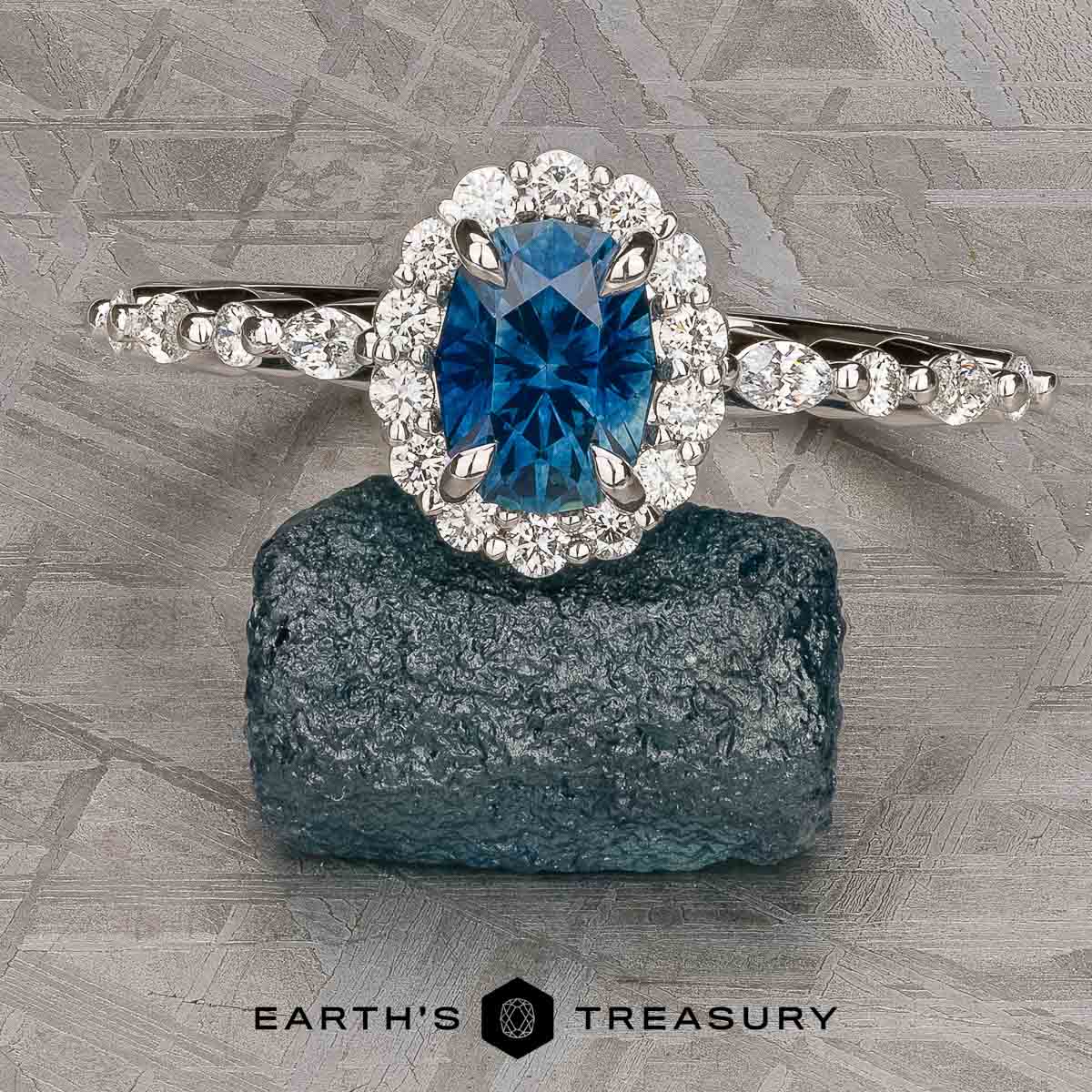
- Halo Settings: Halos traditionally surround the center gem with a ring of smaller gems, making the gem appear bigger.
- Bezel Settings: Bezels surround the center gem with metal, adding visual weight that can make the center gem appear bigger.
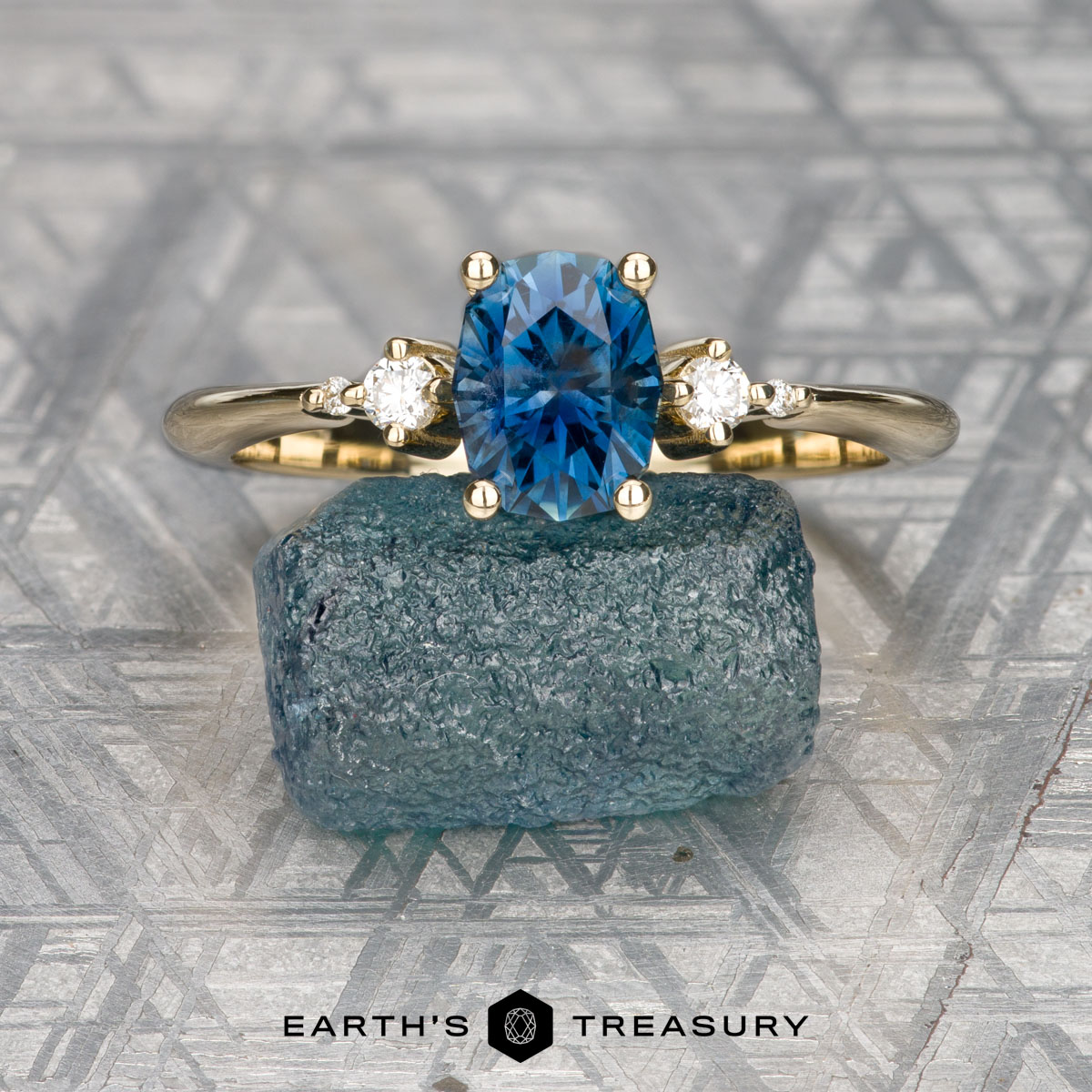
- Band Width: Thinner, petite bands can make your center gem appear larger. Pave styles featuring sparkling diamonds set in the band can enhance your gem’s appearance, as well.
Hand Proportions
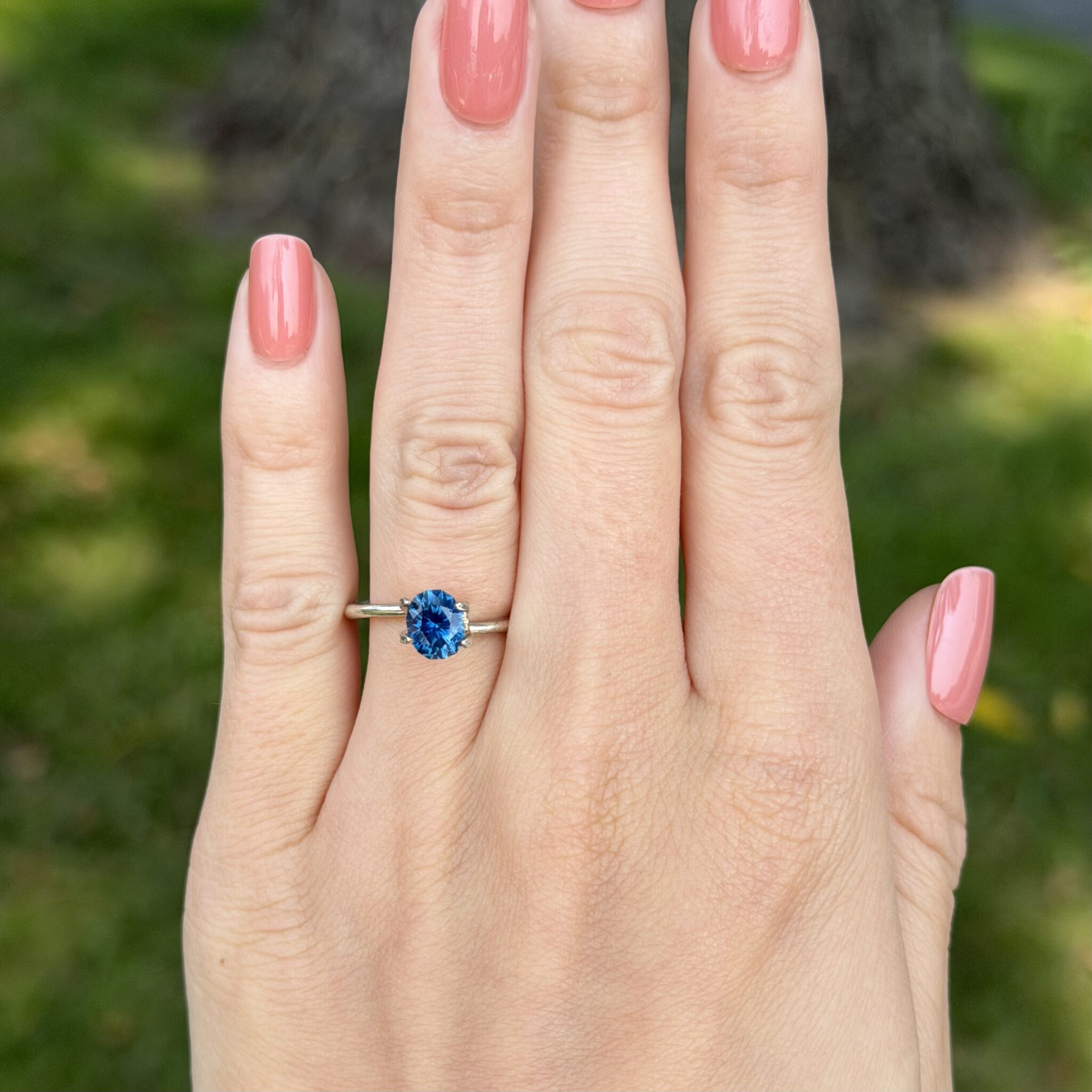
Your hand size and finger shape also impact how large a gemstone appears. If you have smaller hands or slender fingers, a smaller sized gemstone may appear more substantial. Individuals with larger hands or broader fingers might prefer larger stones to achieve the same visual balance.
You can see how much space a 1.29-carat Montana sapphire takes up on three different sized fingers below.
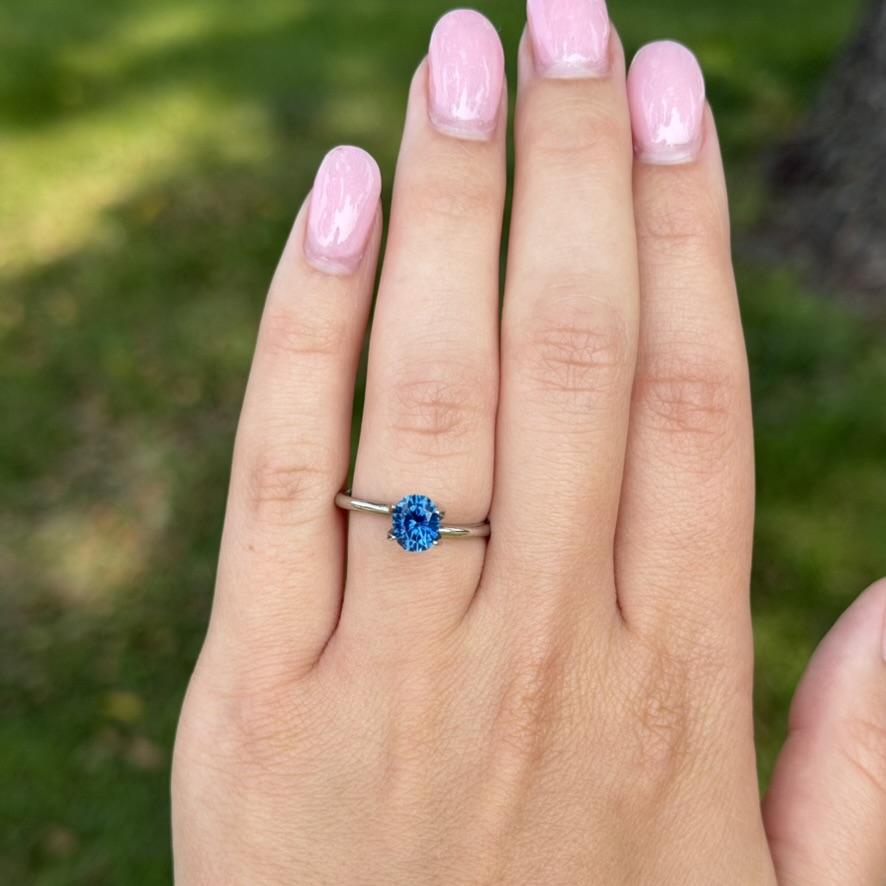
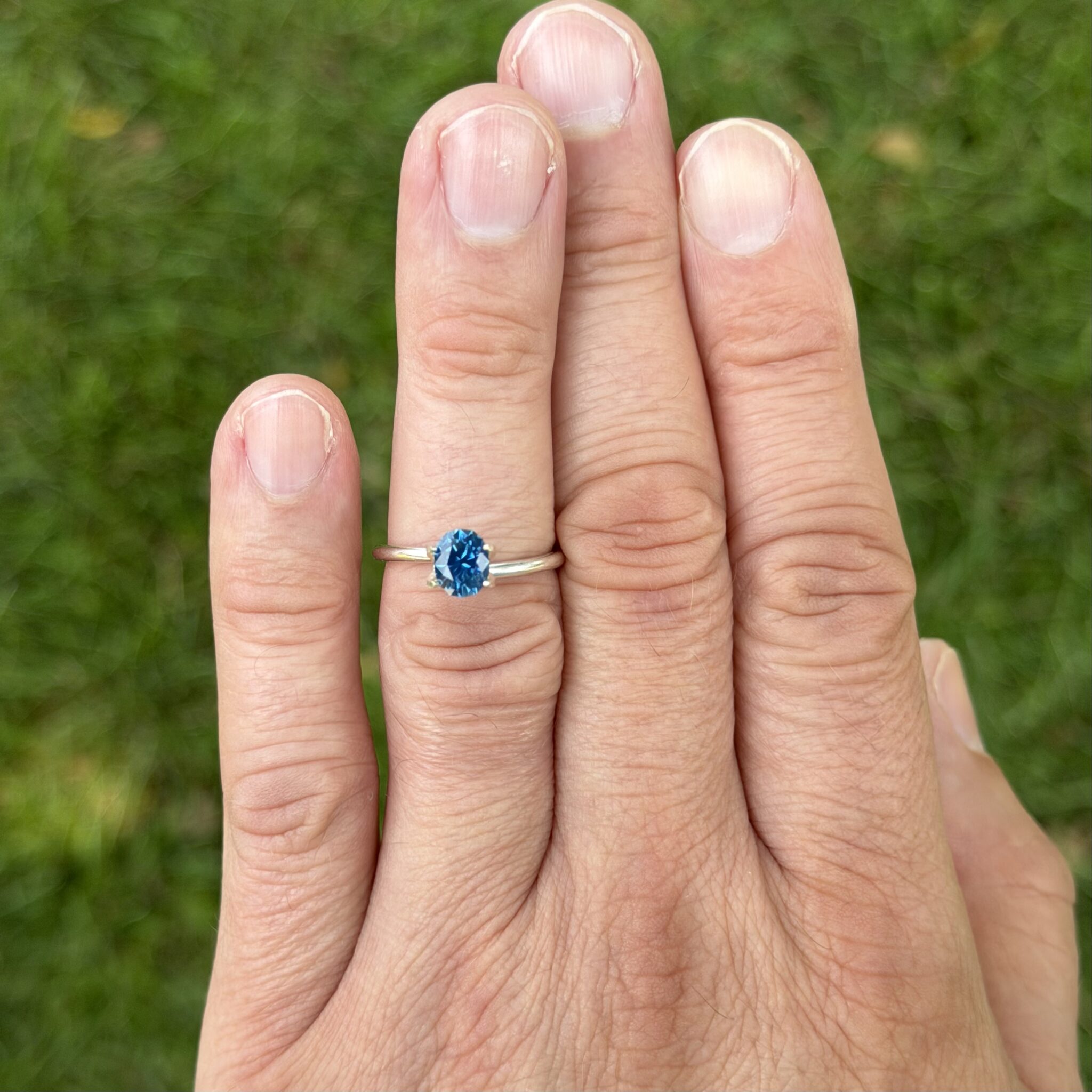
Tips:
- For petite hands, consider elongated shapes like ovals to maximize visual impact without overwhelming the hand.
- For larger hands, round cuts can add balance to your finger.
Making an Informed Choice
By understanding the nuances of carat weight, millimeter size, gem shape, setting style, and hand proportions, you can make a more informed decision when selecting your perfect gemstone. To help compare multiple gems, we highly reccomend submitting a video request. You’ll get to see your top choices side-by-side on a hand and in natural lighting.